Clinical-grade metalwork, installed around the people who need it.
Hospitals are tough environments to build in and you can't get it wrong. We fabricate and install bespoke metalwork for NHS trusts and healthcare providers, working within HTM guidelines, infection control protocols, and the reality of buildings that never close.

What healthcare engineering demands
A hospital isn't like any other building. The compliance framework is different, the installation constraints are different, and the consequences of getting it wrong are measured in clinical risk. We treat every NHS project with that understanding built in from the start.
You can't shut a hospital down for a refit. Fabrication and installation work happens around patients, staff, and visitors, often in occupied wards, corridors, and treatment areas. That means strict noise and dust controls, hot works permits, infection prevention measures, and phased delivery programmes that flex around clinical schedules.
You can't shut a hospital down for a refit. Fabrication and installation work happens around patients, staff, and visitors, often in occupied wards, corridors, and treatment areas. That means strict noise and dust controls, hot works permits, infection prevention measures, and phased delivery programmes that flex around clinical schedules.
Clinical environments demand finishes that can withstand aggressive cleaning chemicals without degrading. Joints need to be sealed. Surfaces need to be smooth, non-porous, and free of crevices where bacteria can harbour. We specify and fabricate in materials and finishes that meet those hygiene requirements from the outset.
Much of the NHS estate is decades old. Refurbishment work means dealing with existing structures that don't always match the original drawings, coordinating around services that can't be moved, and adapting designs on site when you find something unexpected behind a wall. We're used to that reality and plan for it.
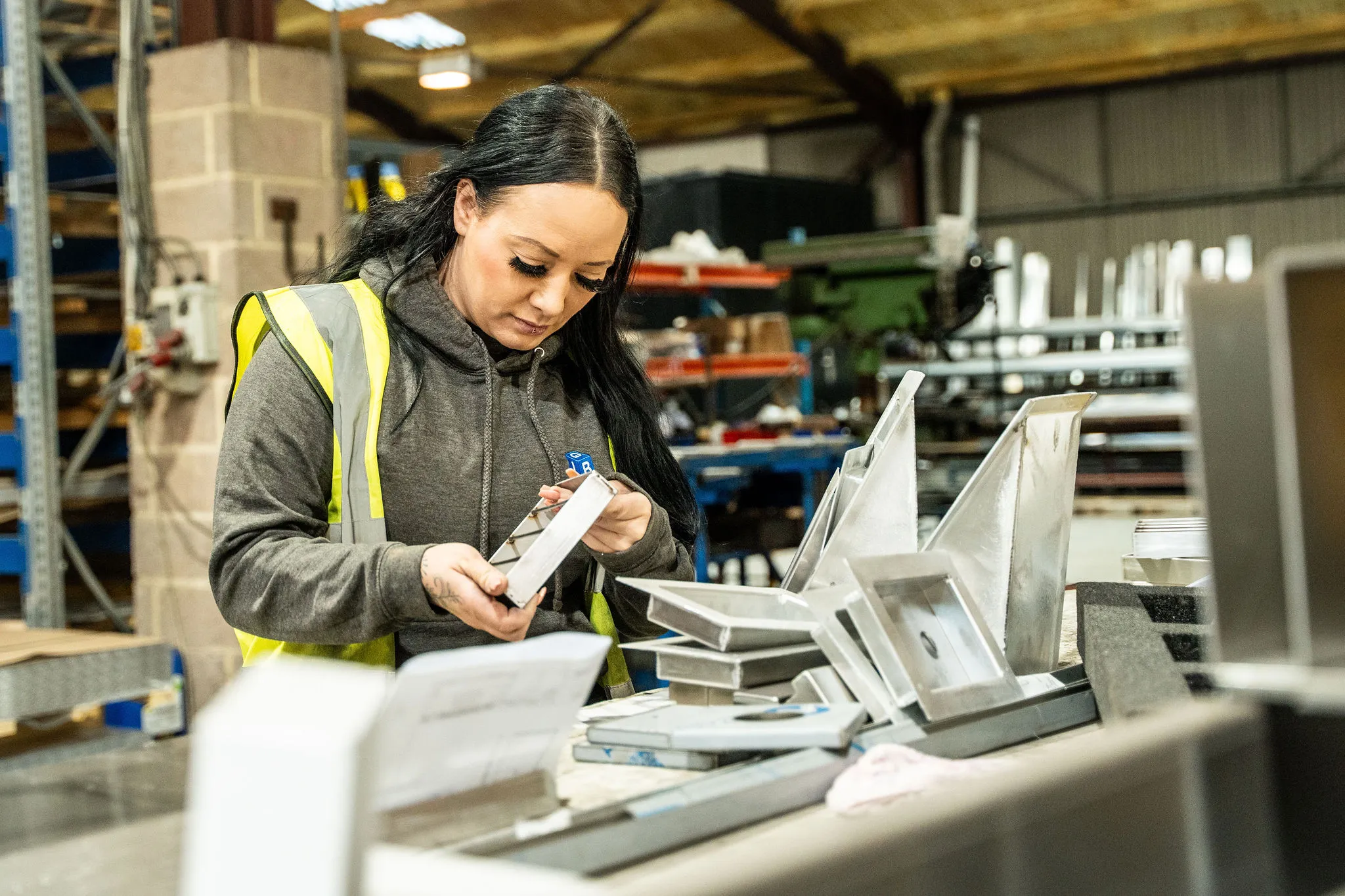
Clinical-grade metalwork, fitted around patient care.
We've delivered metalwork into NHS environments ranging from ward refurbishments and outpatient fit-outs to new-build clinical facilities. Our teams understand what it takes to work on a live hospital site: the permits, the protocols, and the need to leave every space clean and safe at the end of each shift.
- Stainless steel clinical fixtures including wash stations,splashbacks, and work surfaces
- DDA-compliant handrails, balustrades, and access ramps
- Ventilation and extraction ductwork for clinical andlaboratory spaces
- Structural steelwork for extensions, mezzanines, andinternal reconfigurations
- Bespoke brackets, frames, and supports for medical equipmentand services
- External infrastructure including covered walkways, entrancecanopies, and bin stores
- Security metalwork for restricted areas, gates, andperimeter control
- Ward and department refurbishment metalwork, phased aroundclinical operations.
Your healthcare metalwork questions, answered
Specifying metalwork isn't always straightforward. Here are the questions we hear most often — and the honest answers.
Yes. We've fabricated and installed metalwork for NHS facilities where HTM compliance isn't optional — it's the baseline. That covers everything from material selection and hygienic finishes to infection control considerations and fire compartmentation. We know what NHS estates teams and building control officers will be looking for at sign-off, and we design with that endpoint in mind rather than working backwards from a problem at handover.
We do it regularly. NHS refurbishment and upgrade projects almost never come with an empty building. We coordinate with estates teams and ward managers to schedule deliveries and installation around clinical operations, infection control protocols, and restricted access zones. We understand the permit-to-work systems, hot works procedures, and noise limitations that apply in healthcare settings — and we plan around them rather than treating them as obstacles.
It varies widely. We've fabricated balustrades, handrails, bespoke enclosures, ductwork, support steelwork, and specialist fixings for NHS facilities. The common thread is that everything needs to meet exacting standards, fit within an existing building that wasn't designed for it, and be installed without disrupting patient care. If your project involves metalwork in a healthcare setting, there's a good chance we've handled something similar.
Talk to us about NHS projects